
July 15, 2026

Making the decision to start hormone therapy is a big step. For many women, it comes after months or even years of dealing with hot flashes, restless nights, mood changes, and feeling unlike themselves. While hormone therapy is recognized as the most effective treatment for many menopause symptoms, one question often comes up before starting:
"How long will it take before I feel better?"
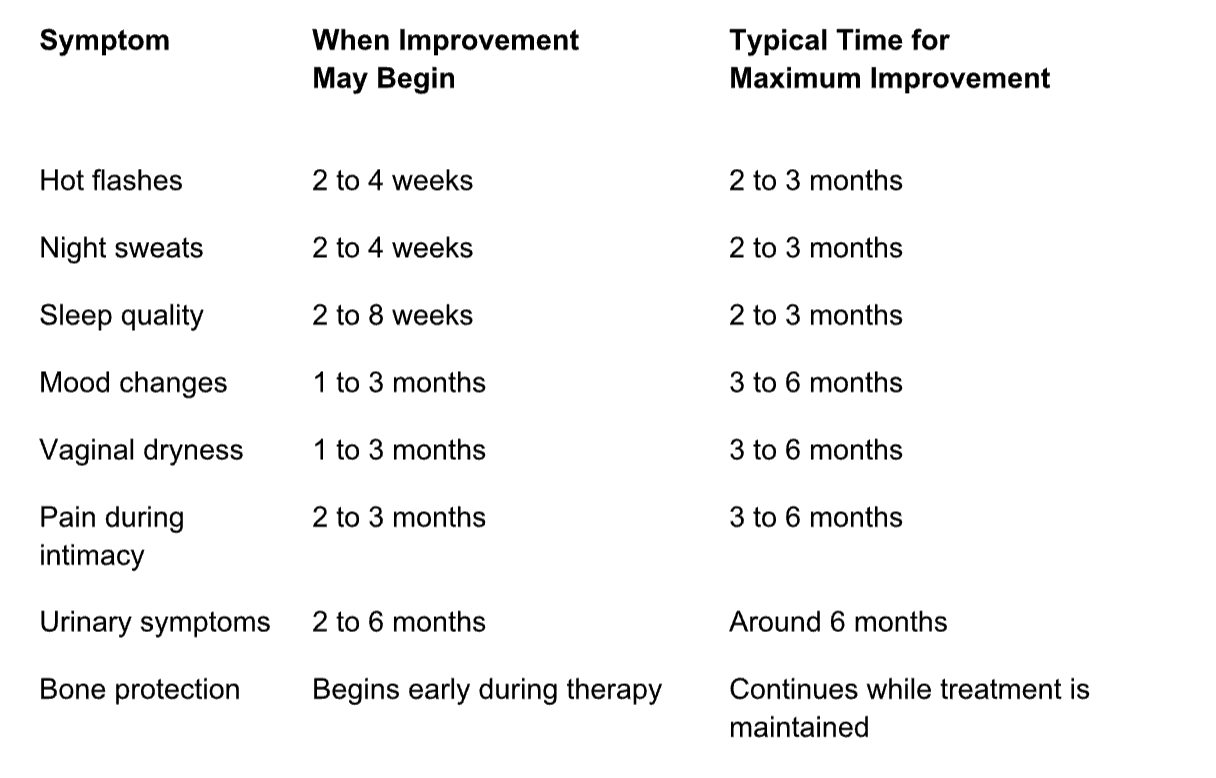
The answer is different for everyone. Some women notice changes within a few weeks, while others experience gradual improvements over several months. Knowing what to expect can make the journey less frustrating and help set realistic expectations.
Unlike taking medication for a headache or an infection, hormone therapy is designed to gradually restore hormone levels that naturally decline during menopause. Your body needs time to adjust, and symptom relief typically happens in stages rather than all at once.
Several factors can influence how quickly you notice changes, including your age, how long it has been since menopause began, the type and dose of hormone therapy prescribed, the method of delivery, and your overall health.
During the first one to four weeks, many women do not notice dramatic changes yet. Some even experience temporary side effects as their bodies adapt to treatment. Mild breast tenderness, bloating, headaches, nausea, or light spotting may occur, particularly with combined estrogen and progesterone therapy.
These early effects are usually temporary and often improve as treatment continues.
Although symptom relief may still be developing, some women begin sleeping a little better as nighttime hot flashes become less frequent. Others notice that they wake up feeling slightly more rested, even if the difference is subtle.
This is often when women begin noticing meaningful improvements.
Hot flashes usually become less frequent and less intense. Night sweats often decrease, allowing for longer and more restful sleep. Many women also report feeling less irritable and more emotionally balanced, largely because they are finally getting consistent rest instead of waking several times each night.
For someone who has spent months sleeping with a fan running, changing clothes in the middle of the night, or throwing blankets on and off, these improvements can make everyday life feel much more manageable.
Research consistently shows that hormone therapy remains the most effective treatment for moderate to severe vasomotor symptoms, including hot flashes and night sweats.
As treatment continues, many women notice improvements beyond hot flashes.
Vaginal tissues become healthier as estrogen helps restore moisture and elasticity. This can reduce vaginal dryness and make intimacy more comfortable. Some women also notice fewer urinary symptoms, such as urgency, irritation, or recurrent discomfort.
These changes often happen gradually, which is why healthcare providers usually recommend giving hormone therapy enough time before deciding whether it is working well.
Many women also describe an improvement in their overall quality of life. They may have more energy for work, feel more engaged in social activities, or simply recognize that they are no longer planning their day around menopause symptoms.
One of the less noticeable but equally important benefits of hormone therapy is its effect on bone health.
As estrogen levels decline during menopause, bones naturally lose density at a faster rate, increasing the risk of osteoporosis and fractures. Hormone therapy slows this process by helping maintain bone mineral density while treatment continues.
For women who begin hormone therapy before age 60 or within ten years of menopause, current evidence suggests that the overall balance of benefits and risks is generally favorable when therapy is used to manage bothersome menopausal symptoms and no medical contraindications are present.
While these timelines are based on findings from clinical studies and expert guidelines, they should be viewed as general expectations rather than exact milestones. Every woman's response to hormone therapy is unique. Factors such as age, overall health, time since menopause, hormone formulation, dosage, and route of administration can all influence how quickly improvements occur. Regular follow-up with a healthcare provider is important to monitor progress and determine whether any adjustments to treatment are needed.
Menopause is a natural transition, but the symptoms that accompany it can significantly affect physical health, emotional well-being, and overall quality of life. While every woman's experience is unique, decades of clinical research have consistently shown that hormone therapy remains the most effective treatment for moderate to severe menopausal symptoms, particularly hot flashes and night sweats.
It is equally important to understand that hormone therapy is a gradual treatment rather than an immediate solution. Most women begin noticing improvements within the first few weeks, with continued progress over several months as the body adapts to treatment. The pace of improvement depends on factors such as age, time since menopause, the type and dose of hormone therapy, and individual response.
Choosing whether to begin hormone therapy should always involve a discussion with a qualified healthcare provider. An individualized treatment plan allows the potential benefits to be carefully weighed against any risks based on a woman's medical history and personal health goals.
Having realistic expectations can make the journey less overwhelming. While the changes may not happen overnight, many women find that gradual improvements in sleep, comfort, mood, and daily functioning lead to meaningful improvements in their overall quality of life.
American College of Obstetricians and Gynecologists. (2024). Hormone therapy for menopause. American College of Obstetricians and Gynecologists.
Lobo, R. A., Davis, S. R., De Villiers, T. J., Gompel, A., Henderson, V. W., Hodis, H. N., Lumsden, M. A., Mack, W. J., Shifren, J. L., & Baber, R. J. (2022). Hormone therapy in menopause: An Endocrine Society scientific statement. Endocrine Reviews, 43(4), 573–603.
Mayo Clinic Staff. (2024). Menopause hormone therapy: Is it right for you? Mayo Clinic.
National Institute on Aging. (2023). What is menopause? U.S. Department of Health and Human Services.
The Menopause Society. (2022). The 2022 hormone therapy position statement of The Menopause Society. Menopause, 29(7), 767–794.
The Menopause Society. (2023). Hormone therapy. The Menopause Society.