
August 14, 2026
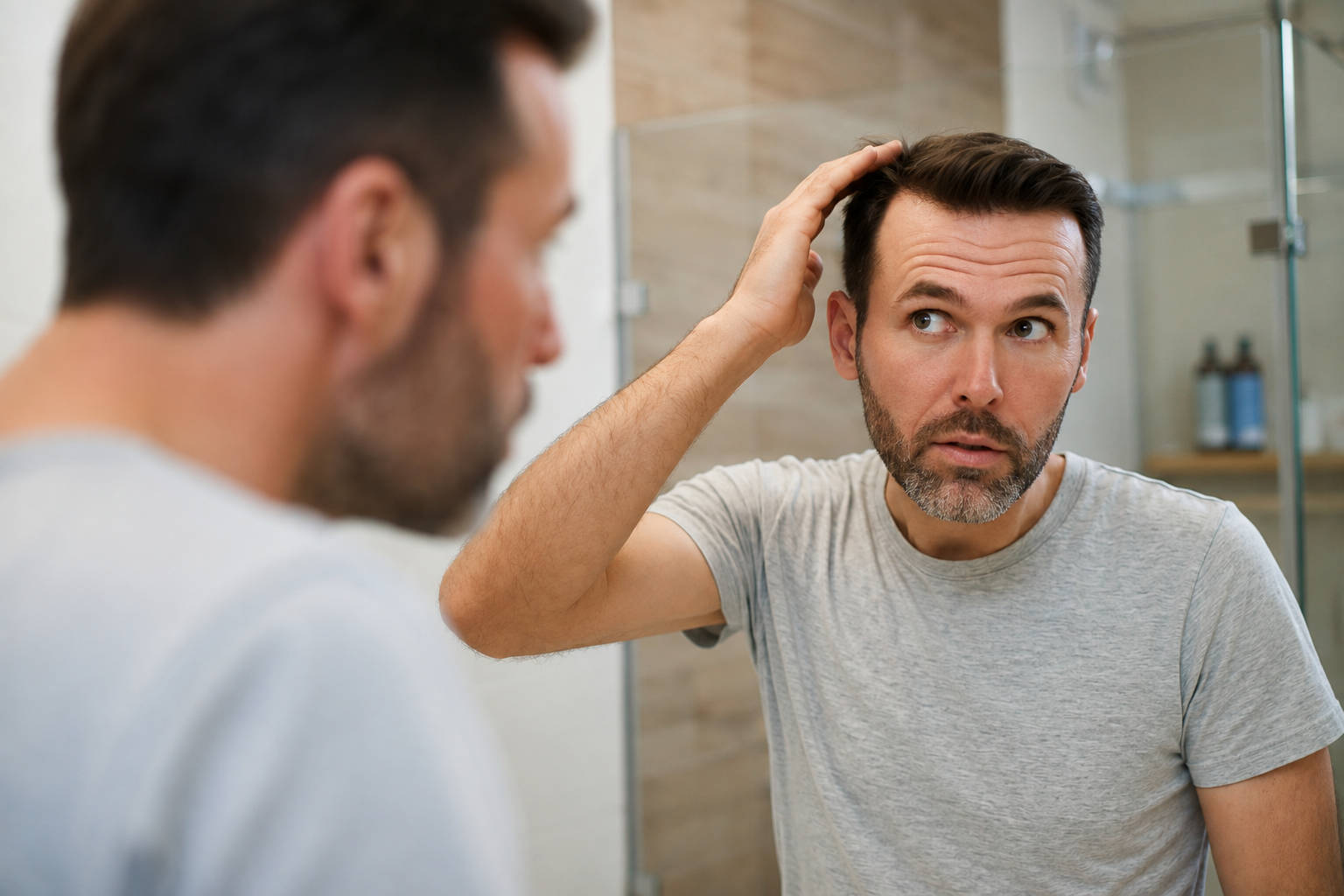
Noticing more hair on your pillow, in the shower, or on your brush can be unsettling. For many men, thinning hair happens gradually and may begin with a receding hairline, a thinner crown, or hair that simply does not look as full as it used to.
Hair thinning is common, but it is not always caused by aging alone. Genetics, hormones, stress, nutrition, medical conditions, medications, and hair care habits can all affect the hair growth cycle.
The good news is that some forms of hair loss can be slowed or treated. The key is understanding what may be causing the thinning and addressing it early.
Men can experience hair loss for many different reasons. Some causes are temporary, while others can lead to progressive hair loss without treatment.
The most common cause of hair loss in men is male pattern hair loss, medically known as androgenetic alopecia.
Genetics play a major role. In men who are genetically susceptible, hair follicles become increasingly sensitive to dihydrotestosterone, or DHT. Over time, affected follicles become smaller and produce finer, shorter hairs. Eventually, some follicles may stop producing visible hair.
Male pattern hair loss usually develops gradually. It may begin with a receding hairline, thinning at the temples, or a bald spot around the crown. Some men begin noticing changes in their late teens or twenties, while others develop noticeable thinning later in life. (American Academy of Dermatology Association, n.d.)
Because hereditary hair loss tends to progress over time, recognizing the early signs can be important. Treatment tends to work better when started before significant follicle miniaturization has occurred. (American Academy of Dermatology Association, n.d.)
Hair growth naturally changes as we get older. Hair may grow more slowly, spend less time in the active growth phase, and become finer.
For men who already have a genetic tendency toward male pattern hair loss, these changes can make thinning more noticeable.
Major physical or emotional stress can affect the normal hair growth cycle.
Some men develop increased shedding several months after an illness, surgery, major emotional event, or other significant stressor. This type of hair loss is often temporary, and hair may gradually return to its normal growth cycle once the underlying trigger has been addressed. (Mayo Clinic, 2026)
Hair growth requires adequate nutrition. Poor nutrition and significant weight loss can contribute to hair shedding.
A diet that does not provide enough protein or essential nutrients may affect normal hair growth. Rapid or significant weight loss can also be associated with increased shedding. (Mayo Clinic, 2026)
This is one reason extreme dieting should be approached carefully. Eating a balanced diet is generally more helpful than relying on large doses of individual supplements.
Some medical conditions can cause temporary or permanent hair loss. Thyroid disorders, scalp infections, autoimmune conditions, and other health problems may affect the hair follicles or the hair growth cycle.
Certain medications can also cause hair loss as a side effect. If thinning begins suddenly after starting a medication, it is worth discussing with a healthcare professional rather than stopping the medication on your own. (Mayo Clinic, 2026)
Unfortunately, genetic male pattern hair loss cannot always be prevented. However, there are steps that may help protect the hair and reduce preventable damage.
If your hairline is gradually receding or the crown is becoming thinner, do not wait until significant hair loss has occurred before seeking advice.
Early treatment may help slow progression and preserve existing hair. Some treatments can also encourage regrowth in areas where follicles are still active. (American Academy of Dermatology Association, n.d.)
Everyday hair care can affect the condition of your hair.
Avoid excessive pulling, aggressive brushing, and hairstyles that place constant tension on the hair. Be particularly gentle when your hair is wet, because wet hair can be more vulnerable to breakage.
It is also helpful to limit excessive heat from hair dryers, straighteners, and curling tools, as well as harsh chemical treatments that can damage the hair shaft. (Mayo Clinic, 2026)
Protecting your scalp from excessive sun exposure is another simple part of good hair and scalp care. Wearing a hat or using other forms of sun protection can help limit ultraviolet exposure.
Smoking has been associated with baldness in men in some studies. Although more research is needed to understand the relationship fully, avoiding smoking is an important part of maintaining overall health. (Mayo Clinic, 2026)
There are countless shampoos, oils, supplements, serums, and hair growth products marketed toward men. However, not every product has strong evidence behind it.
For male pattern hair loss, two of the most established treatments are minoxidil and finasteride.
Minoxidil is a topical medication that can help slow hair loss and stimulate hair growth in some men.
It is available without a prescription in various formulations, including liquid and foam. When it works, noticeable improvement generally takes several months. Consistent use is important, and stopping treatment can cause the benefits to gradually disappear. (Mayo Clinic, 2026)
Some people experience scalp irritation or unwanted hair growth in areas where the medication comes into contact with the skin.
Minoxidil does not work equally well for everyone, and it is not expected to restore all lost hair. However, it remains one of the most established options for men with pattern hair loss.
Finasteride is a prescription medication used to treat male pattern hair loss in men.
It works by reducing the body's conversion of testosterone into DHT. By lowering DHT levels, finasteride can help reduce the hormonal effect that contributes to the shrinking of susceptible hair follicles.
Studies have shown that finasteride can slow further hair loss in many men, and some men experience new hair growth. Results generally take several months and are maintained only while treatment continues. (American Academy of Dermatology Association, n.d.)
Finasteride is not appropriate for everyone and can cause side effects, including sexual side effects in some men. Anyone considering it should discuss the benefits and risks with a qualified healthcare professional.
Volumizing shampoos and conditioners can make existing hair appear fuller. They may also help improve the feel and appearance of thinning hair.
However, cosmetic thickening is different from treating the cause of hair loss. A shampoo may make the hair look fuller without actually stimulating new growth.
Look for gentle products that do not leave the scalp excessively dry or irritated.
Hair supplements are heavily marketed toward men experiencing thinning hair. They may contain ingredients such as biotin, zinc, iron, or other vitamins and minerals.
However, more is not necessarily better.
Biotin deficiency can cause thinning hair, but true biotin deficiency is rare. There is also limited evidence that taking additional biotin improves hair growth in people who already receive enough from their diet. High doses of biotin can interfere with certain laboratory tests. (National Institutes of Health, Office of Dietary Supplements, 2026)
If a nutritional deficiency is suspected, it is better to identify and correct the deficiency rather than taking multiple supplements without guidance.
Lifestyle cannot change the genetics behind male pattern hair loss, but healthy habits can support the body's normal hair growth processes and help address factors that may contribute to shedding.
Hair is made primarily of a protein called keratin, so adequate protein is important for normal hair growth.
Aim for a varied diet that includes protein sources, vegetables, fruits, whole grains, and healthy fats. Avoid extreme diets that significantly restrict calories or entire food groups.
If you have experienced substantial weight loss or follow a highly restrictive diet, discuss your nutritional needs with a healthcare professional if you are also experiencing increased hair shedding.
Chronic stress can affect the hair growth cycle and may contribute to increased shedding.
Regular exercise, sufficient sleep, time for relaxation, and healthy ways of managing stress can support overall health. While these habits cannot reverse genetic baldness, they may be particularly helpful when stress is contributing to temporary shedding.
Good sleep supports overall physical health and recovery. Poor sleep alone is not considered a direct treatment target for male pattern baldness, but maintaining a consistent sleep routine can contribute to better stress management and overall well being.
Regular physical activity supports cardiovascular health, metabolic health, and general well being.
Exercise should not be viewed as a hair loss treatment by itself, but it can be part of a healthy lifestyle that supports the body as a whole.
Rapid weight loss can be associated with increased hair shedding. If you are trying to lose weight, gradual and sustainable changes are generally preferable to severe calorie restriction.
If noticeable shedding develops after significant weight loss, speak with a healthcare professional to determine whether nutrition or another factor may be involved.
Not every type of hair loss is male pattern baldness.
Consider getting evaluated if you notice sudden or rapid hair loss, round or patchy bald spots, significant scalp irritation, scaling, redness, pain, or unusually heavy shedding.
Hair loss that develops suddenly can sometimes indicate an underlying medical condition that requires treatment. A healthcare professional can review your medical history, medications, diet, family history, and scalp condition to help determine the cause. Blood tests or other examinations may also be recommended when appropriate. (Mayo Clinic, 2026)
Getting the correct diagnosis matters because treatment for genetic hair loss is different from treatment for nutritional deficiencies, scalp conditions, medication related shedding, or autoimmune hair loss.
Thinning hair is common among men, but it does not always mean that nothing can be done.
For men with male pattern hair loss, early attention can make a difference. Treatments such as minoxidil and finasteride have evidence supporting their use, while gentle hair care and a balanced lifestyle can help support overall hair health.
Be cautious about products that promise dramatic results in a short amount of time. Hair grows slowly, and effective treatments generally require consistent use over several months.
Most importantly, pay attention to changes in your hair. A gradually receding hairline or thinning crown may be consistent with male pattern hair loss, while sudden or patchy hair loss may require a closer medical evaluation.
If you are experiencing hair thinning or increased shedding, consult a healthcare provider or dermatologist before starting a new medication, supplement, or hair loss treatment. A healthcare professional can help identify the underlying cause and recommend an approach that is appropriate for you.
American Academy of Dermatology Association. (n.d.). Hair loss: Who gets and causes.
American Academy of Dermatology Association. (n.d.). What is male pattern hair loss, and can it be treated?
American Academy of Dermatology Association. (2022). Finding the right treatments for genetic hair loss.
Mayo Clinic. (2026). Hair loss: Symptoms and causes.
Mayo Clinic. (2026). Hair loss: Diagnosis and treatment.
Mayo Clinic. (2023). Stress and hair loss: Are they related?
National Institutes of Health, Office of Dietary Supplements. (2026). Biotin: Fact sheet for consumers.